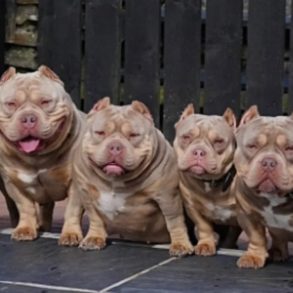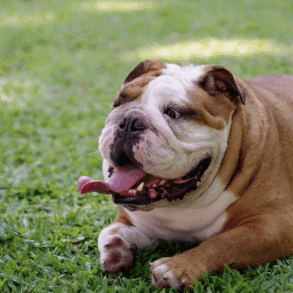



When you look at an American bulldog, the first thing you may notice is their solid build. Built like a linebacker with the heart of a golden retriever, these dogs will quickly make you rethink everything you thought you knew about tough-looking dogs. Look deeper, and behind the broad chest and powerful jaw you’ll find a goofball who thinks of themself as a lap dog (albeit a giant lap dog). These dogs will steal your spot on the couch and follow you from one room to another like the Velcro dog that they are.
The challenge with bulldogs is that they come with real considerations. The American bulldog, for example, is a powerful dog that needs experienced handling. If you love their personality but would like to explore other options, we’ve rounded up six dog breeds similar to bulldogs below.
🐶SIGN UP to get “pawsitivity” delivered right to your inbox with inspiring & entertaining stories about our furry & feathered friends🐾🐾
We spoke with several animal experts, including a veterinarian, a veterinary chief medical officer and an animal science expert, to walk us through some bulldog look-alikes and if they’re similar to the beloved bulldog in terms of their look, personality or both. For first-time dog parents that are drawn to the bulldog-like build, these sweet softies are some alternative breeds worth knowing about.
6 Dog Breeds Similar to Bulldogs
Learn more about these six dog breeds that are similar to bulldogs and see what makes each one so special.
Staffordshire Bull Terrier
Images via Shutterstock/Groomee
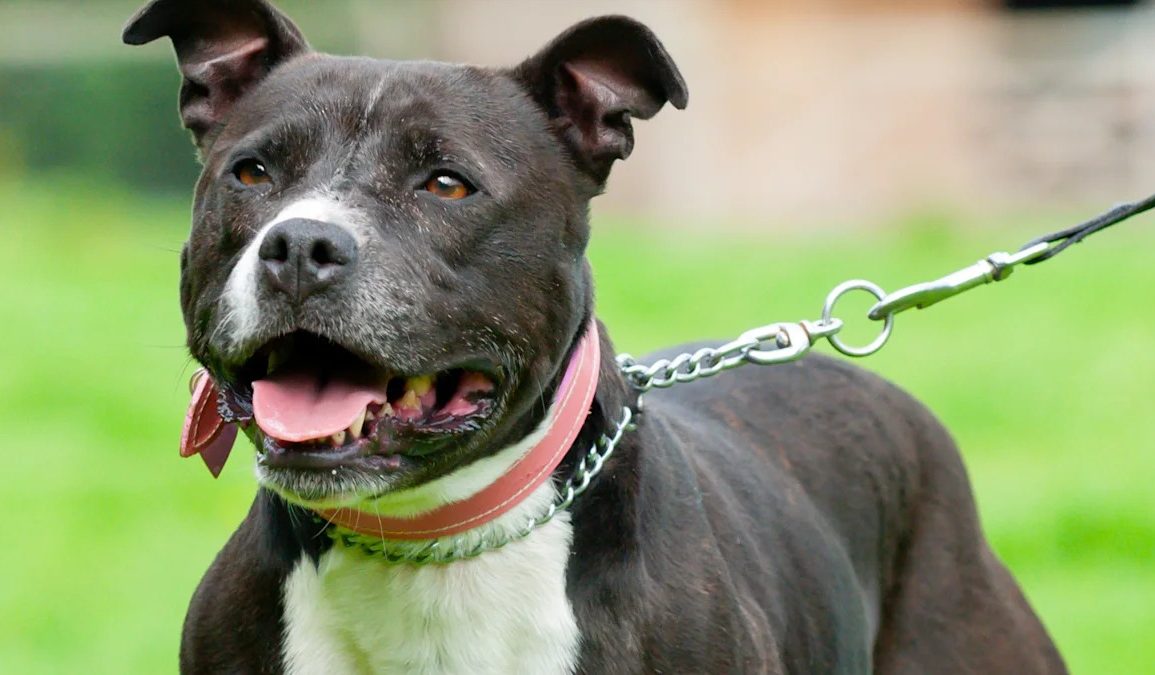
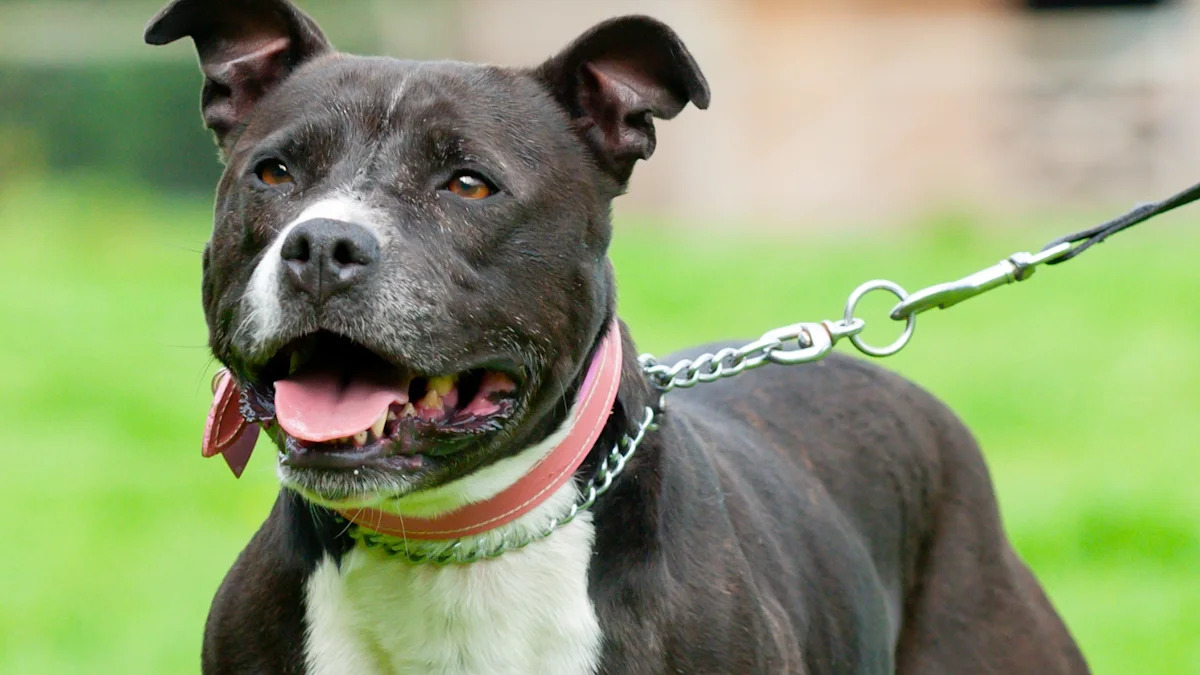
If there was ever a bulldog-like dog ideal for families, that would be the Staffordshire bull terrier.
Advertisement
Advertisement
“They tend to be more compact than the American bulldog, slightly less physical, smarter, higher energy and, on average, better with children,” says Dr. Feargus McConnell, a veterinarian and the founder of Dr. Ferg’s.
He recommends first-time parents with families choose either the American Staffordshire terrier or the English Staffordshire terrier. They’re ideal for people who are drawn to the bulldog appearance but who don’t have the experience of having a powerful dog.
Dr. Jamie Richardson, the chief medical officer at Small Door Veterinary and Bond Vet, agrees. “Staffies share bulldog ancestry and a stocky build. They are affectionate, but need daily exercise, and skin allergies are common,” he says.
One thing prospective dog parents need to remember is that Staffies have plenty of energy. They’re not couch potatoes, so you’ll need to find time for walks and playtime for these pups.
Advertisement
Advertisement
Staffies were originally bred in England from crosses between bulldogs and terriers, which is how they have the athletic edge similar to bulldogs. Dr. McConnell also mentions the health aspect of the breed. He says that of all the bulldog-type breeds, Staffies tend to be among the healthiest and longest-living.
French Bulldog

Image via Shutterstock/Liliya Kulianionak
The French bulldog is a breed many people think of first when they’re looking for a smaller bulldog-like dog, and there’s a good reason for that. As Dr. Richardson explains, the Frenchie is the closest cousin to the bulldog. They’re compact, affectionate and apartment-friendly.
One important thing to note is that cross-bred Frenchies are a better option than a purebred one. “Do not buy a purebred French bulldog,” Dr. McConnell says. “They have far too many health issues and will cost you 10 times the purchase price.”
His recommendation is to try and find a French bulldog cross from a reputable breeder. A well-bred cross shares the personality and compact size of Frenchies without the breathing, spinal and skin issues.
Advertisement
Advertisement
Emily Halaszynski, an animal science expert and the director of education at Bernie’s Best, says that “French bulldogs share older bulldog ancestry with several breeds, but their development followed a distinct path.”
They developed from smaller English bulldogs established in France, evolving into a companion breed with broader, heavier bodies and rounded ear tips compared to similar-looking breeds.
If you opt for a crossbreed, check with the breeder about the health history of both parents. One single question may save you years of veterinary bills.
Related: 5 Things a Dog Is Trying to Tell You When They Put a Paw on You, According to Experts
Boston Terrier

Image via Shutterstock/otsphoto
People often confuse Boston terriers for a French bulldog, but these two dogs are different.
Advertisement
Advertisement
“Boston terriers developed in the United States from bulldog-and-terrier ancestry associated with the Boston area. Frenchies developed from the smaller English bulldogs established in France,” Halaszynski explains.
She also points to the lighter, leggy outline of the Boston terrier, and their pointed ears. The so-called tuxedo markings are what make these dogs stand out too.
Dr. Richardson notes that Boston terriers offer the bulldog’s friendly nature in a smaller, more energetic package. He also has one important note for pet parents too: their prominent eyes are prone to injury, so keep that in mind if you’re considering this breed.
For prospective pet parents who love bulldogs but appreciate a dog with more zip, the Boston terrier is a solid pick. They’re livelier and more playful compared to Frenchies, but they’re still small enough and suitable for apartment living.
Boxer

Image via Shutterstock/Hoaxwolf
The boxer is what happens when you add engine to a muscular build like the bulldog.
Advertisement
Advertisement
“Boxers have the bulldog’s muscular frame with far more energy,” Dr. Richardson says.
The energy difference is an important aspect. Bulldogs are happy with a short walk and a long nap. Boxers love to run, play and show their goofy side. They always want to be in the middle of whatever their family is doing.
If you want a bulldog-like dog more suitable for an active lifestyle, the boxer is a natural fit. Look at them side by side, and you’ll notice they share the same broad chest and strong jaw. But boxers move like athletes, and their temperament is more playful and protective without the stubbornness of an American bulldog.
The only thing you have to remember is the health concern. These dogs carry higher risks of heart disease and cancer, specifically mast cell tumors and lymphoma. But if you can match their energy and remain on top of preventive care, boxers will reward you with an enthusiastic, affectionate companion in the same bulldog family tree.
English Mastiff

Image via Shutterstock/Volodymyr Burdiak
Among the bulldog alternative dog breeds, the English mastiff is among the larger options. With this dog, you get the bulldog temperament in a larger package.
Advertisement
Advertisement
Dr. McConnell says that in his experience, these dogs are gentle giants who are loyal and cuddly. However, he adds that they’re prone to bone cancer and don’t live very long, so keep that in mind.
Dr. McConnell personally leans toward recommending a Staffy over a mastiff because Staffies tend to be healthier and live longer, but he acknowledges that the mastiff fills a specific niche. “If you want a couch potato, go for the mastiff,” he says.
This is also not a breed for first-time owners. At 120 to 230 pounds depending on the type, even a well-behaved Mastiff requires confident handling and early socialization. When you add the veterinary costs due to joint supplements for giant breeds and the sheer volume of food, owning an English mastiff can be costly.
St. Bernard

Image via Shutterstock/EL_Images
For our last pick, Dr. McConnell calls this his wild card recommendation. This dog looks nothing like the bulldog, but it shares the same personality. For pet parents who want a calm, cuddly, gentle-giant personality, the St. Bernard delivers.
Advertisement
Advertisement
“These guys are gentle giants usually. Cuddly as can be. But this breed was bred for a hardcore job, traversing mountains to save lost or injured monks, hikers and skiers. And every now and again you get one with these very strong instincts, and if you can’t handle it, it’s going to be a serious 140-pound liability,” Dr. McConnell explains.
He has a warning because of the working heritage of the breed. Raising this dog as a family pet will often result in a mellow and affectionate character, but they still carry the physical capability and drive of a mountain rescue dog. Inexperienced dog parents might find themselves in over their head with this breed.
For the right person, the St. Bernard offers something that none of the other dog breeds similar to bulldogs can: a dog that looks like it belongs in a snow-covered painting but acts like a giant lap dog.
Sources:
Related: Can Dogs and Cats See Ghosts? An Animal Medium Weighs In
This story was originally published by PetHelpful on Nov 24, 2026, where it first appeared in the Dogs section. Add PetHelpful as a Preferred Source by clicking here.
This post was originally published on this site be sure to check out more of their content.