


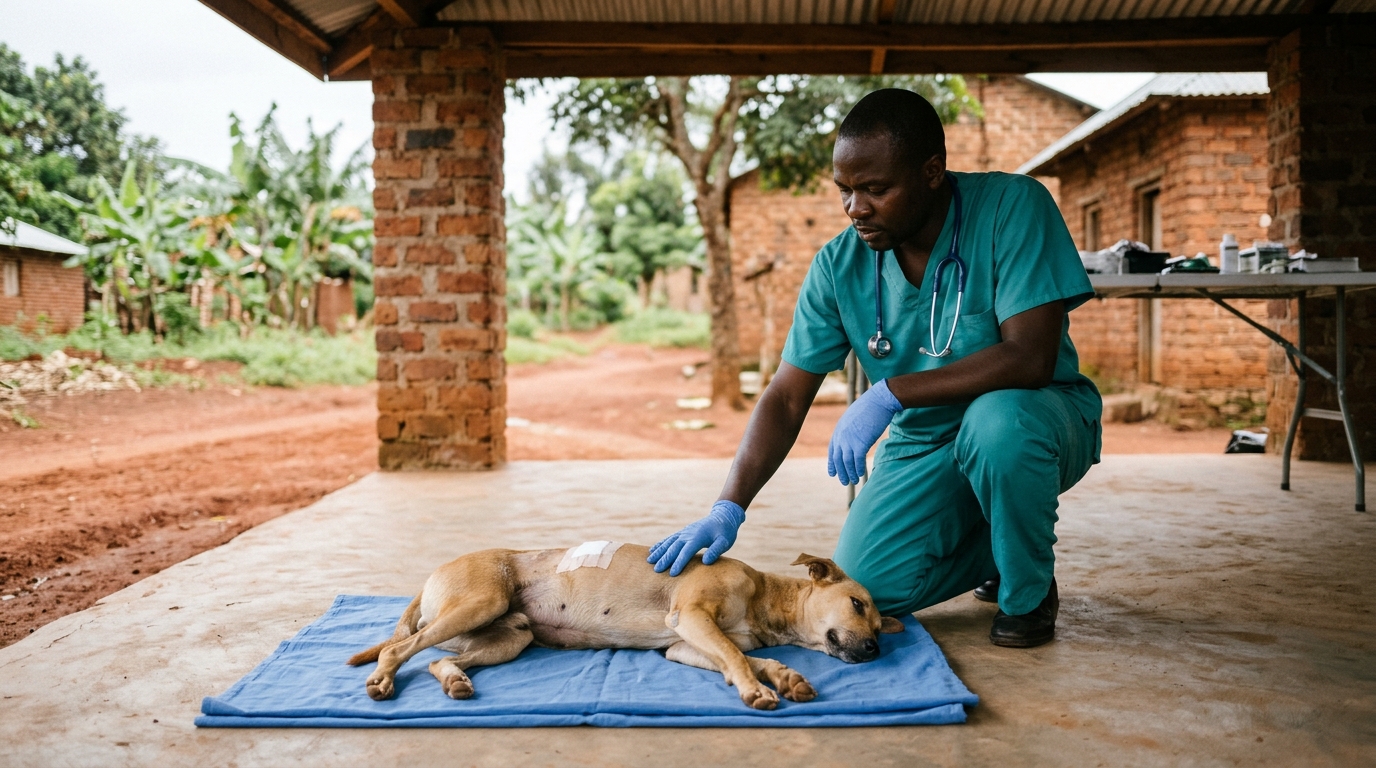
A longitudinal veterinary evaluation conducted across the Kampala Metropolitan Area in Central Uganda has revealed that free single-day community pet clinics expose surgical canine patients to substantial welfare challenges, including procedural distress, extreme dehydration, untreated thermal stress, and elevated rates of postoperative complications. Free community pet clinics serve as vital public health and animal management interventions across resource-constrained regions where veterinary infrastructure remains largely inaccessible or financially prohibitive. However, because these outreach operations are compressed into single-day schedules conducted in outdoor field settings, veterinary researchers established an intensive monitoring protocol to examine how patient transportation, pre-surgical waiting environments, physiological fitness, and limited post-operative analgesia intersect to impact the short-term and thirty-day welfare of forty-six sterilized domestic dogs.
Researchers partnered with local outreach efforts, including those linked to the Uganda Society for the Protection and Care of Animals, to enroll a cohort of forty-six local breed dogs presented by their owners across three separate clinic events. Demographic records compiled by the investigative team indicated that twenty-four of the animals were male and twenty-two were female. In terms of developmental stages, adult canines comprised fifty-four percent of the enrolled population with twenty-five individuals, puppies represented forty-three percent with twenty animals, and a single geriatric dog accounted for the remaining two percent. Clinical teams evaluated potential surgical candidates upon arrival, with the principal investigator serving as the referent for data collection decisions while three trained veterinary assessors performed synchronized physiological screenings, behavioral observations, and structured longitudinal follow-up evaluations.
Transportation logistics from regional households to the temporary clinic locations presented immediate physical and psychological strains for the arriving animals, reflecting the socio-economic realities of dog owners residing in underserved urban and peri-urban communities. Overall, walking on foot proved to be the most common method of clinic transit, accounting for sixty-three percent of attending dogs, while twenty-eight point three percent were transported within private automobiles and eight point seven percent were brought on public commercial motorcycles locally known as boda-bodas. Geographic information system mapping demonstrated that distance strongly dictated the transportation medium, as owners traveling an estimated median distance of two kilometers walked, those traveling a median of three point eight kilometers arrived by car, and those relying on boda-bodas journeyed the longest median distance of nine point five kilometers, with trips ranging up to eleven kilometers. A Kruskal-Wallis test demonstrated a statistically significant difference in median travel distance across transport modes, with post hoc Dunn tests confirming that motorcycle and car journeys differed significantly from walking, while motorcycles frequently involved fastening animals to exposed seat carriers with rubber straps or confining them inside sisal sacks.
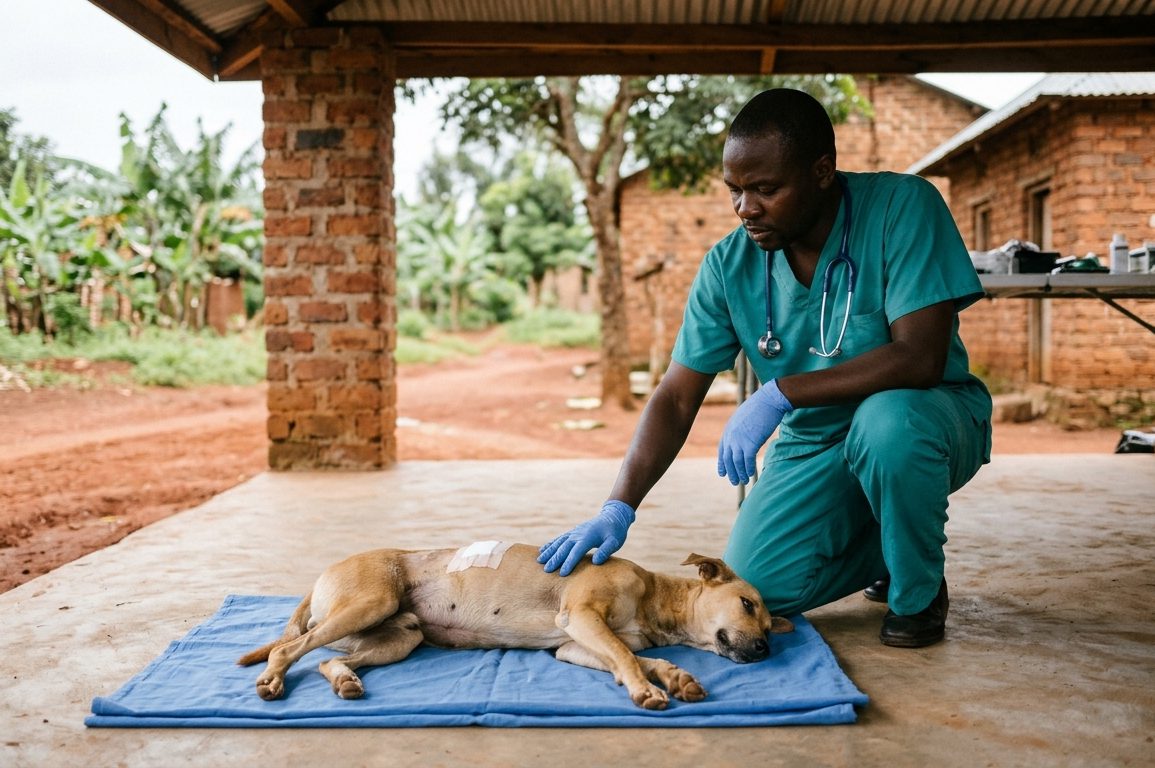
Upon reaching the temporary clinic stations, animals entered lengthy holding phases characterized by a severe scarcity of environmental provisions and supportive infrastructure to facilitate recovery from transit stressors. Participating dogs spent a mean total duration of two hundred one point seven minutes at the facilities, with an average pre-surgical delay of one hundred fifty-one point four minutes elapsing between initial arrival and the induction of general anesthesia, followed by a mean post-surgical recovery period of fifty point three minutes prior to departure. Following surgical completion, basic provisions remained minimal, as soft recovery bedding was accessible to only fifteen point two percent of recovering patients, and thermal blankets intended to mitigate post-anesthetic hypothermia were supplied to only twenty-one point eight percent of the dogs.
Comprehensive pre-surgical clinical evaluations highlighted critical baseline health deficits among the prospective surgical candidates, raising urgent ethical questions regarding patient selection during humanitarian outreach events. Using an adapted nine-point body condition scale and standard field guidelines, examiners identified that thirty-nine percent of the dogs fell into fair or poor physical fitness categories, with twenty-six percent classified as underweight. Furthermore, forty-five percent of the canines presented with core body temperatures above thirty-nine point two degrees Celsius that were definitively categorized as hyperthermia rather than infectious fever through triplicate rectal thermometer assessments spaced at five-minute intervals. Statistical modeling via two-way analysis of variance indicated that neither transport method nor ambient temperature exerted a statistically significant main effect on rectal temperature, and linear regression revealed no significant predictive association between distance traveled and core body temperature.
To rigorously quantify overall welfare impacts, the research team deployed an adapted Animal Welfare Assessment Grid, scoring parameters from one to ten across physical health, psychological well-being, and veterinary procedural events while omitting the residential environmental domain. The quantitative assessment demonstrated that procedural events exerted the most substantial negative welfare impact on the dogs, generating an elevated mean domain score of three point five two. This heightened impact was largely driven by the physical restraint required for examination, disruptions to familiar daily routines, and unavoidable procedural tissue trauma associated with surgical interventions performed under field conditions. In contrast, baseline physical health scored one point seven one, as the majority of animals displayed normal active mobility without lameness, although low body condition scores and high ectoparasite burdens remained prevalent across the cohort.
Surgical interventions were performed under a uniform, pre-existing chemical protocol that utilized an intramuscular premedication of xylazine, followed by induction with intravenous ketamine hydrochloride and maintenance achieved through intravenous propofol administration. At the conclusion of each spay or neuter procedure, clinical staff administered prophylactic medical therapy consisting of a single subcutaneous injection of procaine penicillin combined with dihydrostreptomycin to counter bacterial contamination, alongside a single intramuscular dose of meloxicam to mitigate acute post-operative pain. Immediate post-surgical inspection of the incision sites revealed that twenty-four percent of patients exhibited acute site abnormalities prior to discharge from the clinic premises.
Longitudinal assessments conducted one week postoperatively documented a substantial incidence of wound breakdown and localized infection among the thirty-nine dogs successfully evaluated during day-seven home visits, representing an eighty-four percent retention rate from the initial cohort. Interestingly, thirteen percent of animals that exhibited completely uncompromised surgical sites immediately following surgery on day zero developed complications by day seven, whereas eleven percent of dogs displaying initial swelling or discharge subsequently experienced dehiscence or infection.
Contrary to historical veterinary assumptions that gonadectomy consistently diminishes intra-species aggression and roaming behaviors, forty-six point four percent of responding owners, representing thirteen individual households, reported a noticeable increase in aggressive behaviors including lunging, growling, snarling, and intense barking. The remaining fifty-three point six percent observed no noticeable deviation from baseline behavior, and no owners reported reductions in aggression. Fisher’s exact testing demonstrated no statistically significant correlation between day-thirty aggression changes and day-seven wound complications. The researchers noted that while owner reporting carries potential subjective bias, the sharp rise in aggressive behaviors may reflect persistent pain memories stemming from the cessation of analgesic coverage, given that dogs received only a single perioperative meloxicam injection without subsequent oral anti-inflammatory therapy during peak inflammatory phases occurring seventy-two hours postoperatively.
The study authors emphasized several critical methodological limitations, foremost among them the constrained sample size of forty-six animals and subsequent patient attrition, which reduced statistical power to detect subtle interactions between transportation variables, systemic health markers, and postoperative recovery pathways. Nevertheless, the findings provide unprecedented documentation of the welfare tradeoffs inherent in low-resource community animal campaigns. The investigators concluded that future outreach programs must implement stringent pre-operative screening protocols, provide basic supportive provisions including oral rehydration and shaded resting areas, establish multi-day take-home analgesia regimens, and structure formal veterinary follow-up networks to ensure high-volume population control does not inadvertently compromise the physical and psychological well-being of treated animals.
Subject of Research: Canine welfare and postoperative outcomes during free single-day community sterilization clinics in Uganda
Article Title: Assessing the welfare of dogs surgically sterilized during single day free community pet clinics in Kampala Metropolitan area, Central Uganda
Article References: Hoareau, Z., Ashabahebwa, L., Lume, W., Bwambale, K., Millman, S. T., & Tayebwa, D. S. (2026). Assessing the welfare of dogs surgically sterilized during single day free community pet clinics in Kampala Metropolitan area, Central Uganda. Animal Welfare, 35, Article e14. https://doi.org/10.1017/awf.2026.10071
Image Credits: AI Generated
Keywords: canine welfare, dog sterilization, Kampala Metropolitan Area, Uganda, free community pet clinics, Animal Welfare Assessment Grid, postoperative complications, wound dehiscence, surgical site infection, boda-boda transport, veterinary public health, dog population management, spay-neuter campaigns, canine hyperthermia, ectoparasites, meloxicam analgesia, postoperative aggression
This post was originally published on this site be sure to check out more of their content.